
Projected vs Actual Release Date
A projected release date is an estimate or calculated date based on the sentence, credits, parole rules, and current custody status. An actual release date is the date the person physically leaves that custody event. San Miguel County release-date questions often fail when those two ideas are mixed. A person can have a bond set but no actual release yet. A parole date can be scheduled but not final. A jail sentence can be affected by good time. A state-prison date can change under CDOC calculations.
Scheduled is not final: A San Miguel County inmate release date can change until the person is actually released or the official record is issued.
Pretrial detainees are the clearest example. They usually do not have a computed end date because they have not been sentenced. Their release depends on bond, court order, dismissal, hold status, or transfer. Sentenced county-jail inmates are different because the sentence and local good-time rules can create a calculable end point. CDOC prisoners are different again because Colorado prison release uses parole eligibility, mandatory release, earned time, and Board action.
Find a San Miguel Release Date
The right release-date source depends on the sentence path. San Miguel County Jail is the local custody facility. CDOC is the state prison system. BOP is the federal prison system. A court record may explain bond, sentence, probation, dismissal, or warrant action. Use the broad San Miguel County released inmates route when the person may already be out and the date must be reconstructed.
- Call San Miguel County Jail at 970-728-1911 if the first question is whether the person is still held locally.
- Check the Activity Logs page for current inmate and booking PDFs, but do not treat them as final release-date records.
- Use court records when release depends on bond, court order, sentencing, probation, dismissal, or warrant recall.
- Search CDOC Offender Search by DOCNO or name if the person was sentenced to state prison.
- Read CDOC date fields as state-prison data, not county jail bond or time-served data.
- Register with VINELink Release Check before release when notification is needed.
- Submit a Sheriff's records request when an official county release date or release reason is needed.
San Miguel County Good Time
San Miguel County's own jail handbook supplies the key local release-date angle. It says sentenced inmates may earn statutory good time at a minimum of seven days per 30 days, and trustee inmates may earn up to a total of ten days per 30 days. Good time is granted only after it is earned. It may be affected by failure to follow directives, orders, or facility rules, and earned good time may be removed for a major violation after the required process.
This is a county-jail rule for sentenced jail inmates. It is not a bond rule. It is not the CDOC earned-time system. It is not a pretrial release promise. The controlling county-jail statute is C.R.S. 17-26-109, which addresses deductions of time and record keeping for county jails. If a San Miguel County jail sentence is short, the release date may be driven by the sentence, jail records, and earned local good time rather than by CDOC.
Because good time can be earned or lost, a date based on it should be confirmed close to release. The jail or official release record is the source for a county sentence. A public current-inmate PDF is a snapshot, not the time-computation file.
For a short San Miguel County jail sentence, ask whether the person is pretrial or sentenced before asking for a projected date. Pretrial release depends on court and bond events. Sentenced release depends on the sentence, credits, conduct, and any hold. The same jail can hold both types of people, but the date logic is not the same.
Bond Release Is Event Based
Bond release is not computed like a sentence release date. The San Miguel County Jail Bonds page says bonds may be posted at the Sheriff's Office at any time by cash, money order, credit card, or cashier's check made directly to the court, and that Inmate Canteen is the online payment route. The bond-rights language says release must occur within six hours after qualifying PR or cash-bond conditions are met unless extraordinary circumstances exist. Required electronic monitoring can extend the hold up to 24 hours.
That rule answers many "when do they get out" questions better than a projected-date search. If bond is ready but the person still appears in custody, confirm that the court-set conditions were met, that the jail was notified, and whether monitoring or another hold applies. The release record or court docket can then show the legal event behind the release.
Bond timing also explains why a person may appear in a same-day custody check after the family or surety has started the payment process. The release clock depends on the qualifying conditions, the defendant's return to jail when required, notice to the jail, and any exception that applies. If another agency has a hold, the local bond event may not mean physical release from all custody.
Good-Time Credit and How Release Dates Are Computed
Colorado prison release-date computation is a state process. CDOC materials use parole eligibility date and mandatory release date concepts. The parole rules in 8 CCR 1511-1 define parole eligibility date as the earliest possible parole release date calculated by CDOC time and release operations based on sentence length, time served, credits, and statute. The same rules define mandatory release date as a parole release date over which the Board has no discretion.
C.R.S. 17-22.5-405 governs CDOC earned time. Earned time may be deducted from a sentence within statutory limits and based on listed progress categories. The effect depends on the sentence, offense, credits, discipline, and CDOC calculation. That is why a CDOC projected release or parole-related date should be read as a current state calculation rather than as a guaranteed date.
Colorado violent-offense parole eligibility also requires careful wording. Public materials on Proposition 128 describe a higher service threshold for certain violent offenses committed on or after the relevant effective date. That does not mean every Colorado inmate serves the same percentage. Release-date computation remains offense-specific and depends on statute, offense date, conviction offense, sentence structure, presentence confinement credit, earned time, and CDOC calculation.
Why San Miguel Release Dates Change
Release dates change because the legal event changes, the custody system changes, or credits change. A San Miguel County release may begin as a bond question and become a court-order question. A county jail sentence may be affected by earned or lost good time. A CDOC prisoner may have parole eligibility, earned time, mandatory release, rescission, or revocation issues. A detainer or transfer can also affect physical release even when one agency's part of the case is done.
| Change Factor | How It Affects Release |
|---|---|
| Bond posted or delayed | Release depends on court-set bond conditions and jail processing, not a sentence end date. |
| Electronic monitoring | San Miguel bond materials allow extra time when required monitoring must be fitted. |
| County jail good time | Earned local deductions can move a sentenced jail release date, and violations can affect them. |
| CDOC earned time | State prison dates may shift under earned-time statutes and CDOC calculations. |
| Parole decision | A grant, denial, deferment, rescission, mandatory release, or revocation can change the timeline. |
| Hold or transfer | Another agency, court, CDOC, federal custody, or ICE may affect physical release. |
CDOC Dates for San Miguel Cases
When a San Miguel County case becomes a state-prison sentence, the public release-date trail moves to CDOC. The CDOC search accepts DOCNO, last name, first name, and gender. Search Tips say DOC number is the primary identifier and is up to six numeric characters. Names return matches beginning with the typed letters, and hyphenated last names should be run together. Gender is supplemental, so all may be safer when uncertain.
The CDOC Parole Board calendar is one state-level place to check release-related scheduling for prison and parole matters.
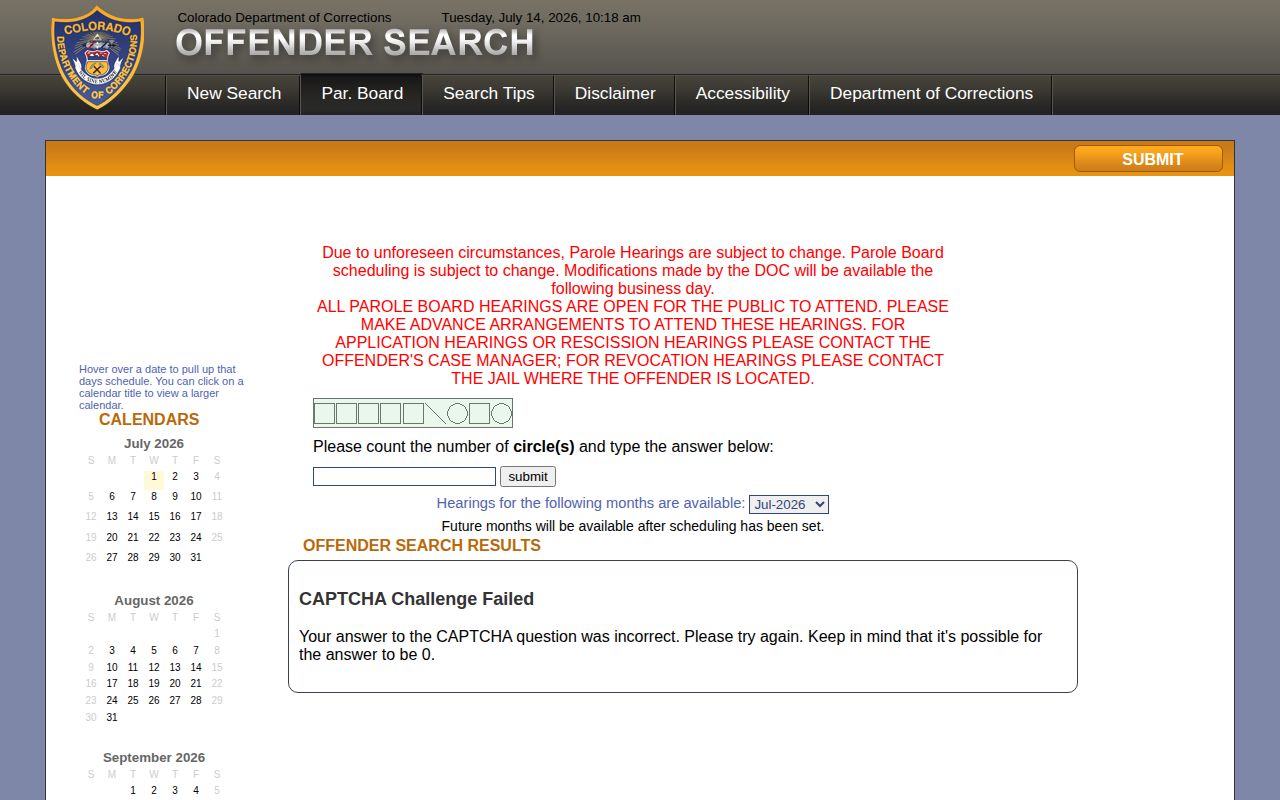
This state screenshot belongs only to CDOC cases; it does not replace the San Miguel County Jail records route for bond or short county sentences.
CDOC date fields should be matched to identity before relying on them. Use DOCNO where available. Compare name, age or other indicators, offense, facility, and status. If the person does not appear, that may mean the person was never sentenced to CDOC, was released from county jail, has a name mismatch, is in another system, or the matter is restricted. A San Miguel County bond release will usually not create a CDOC record.
CDOC's disclaimer says the database may contain inaccurate information and users should contact CDOC to confirm all information. That warning is important for projected release dates, parole dates, and status fields.
Colorado parole rules add another reason to confirm. A parole grant is not final until actual release, and the Board may suspend a previously established release date and hold a rescission hearing for good cause. A public date should be checked again near release, especially when there is a new disciplinary issue, a new case, a hold, or a parole-plan problem.
San Miguel County court records can also explain why CDOC appears in the first place. A mittimus or sentencing order may show that the county case became a prison sentence. Without that court link, a CDOC search result may not answer a county jail release question.
Confirming a Release Date
Use the source with legal control over the custody event. For San Miguel County Jail, call the jail for current custody and request the Sheriff's release record for the official date and reason. For court-ordered release, bond, probation, dismissal, or sentence, use San Miguel County court records. For state-prison release, use CDOC and parole records. For federal release, use BOP. For immigration custody after local release, use ICE sources.
Colorado VINE is useful when the person is still in custody and an alert is needed. It can send release or transfer notice for participating feeds, but it may lag and is not a permanent release archive. Register before the expected release, then confirm with the agency after notice arrives.
If the person has disappeared from the San Miguel current list, do not call that a release date by itself. Check whether the person was transported to court, taken to medical care, transferred to another detention facility, moved to CDOC, or released on bond. The official date is tied to the custody event that actually occurred.
Note: A projected date is a planning clue. The release record, court order, CDOC confirmation, or jail confirmation is stronger proof.