
Released Mugshots as Public Records
A mugshot is a booking or arrest photograph tied to a custody event. In San Miguel County, a released person may no longer appear on the current jail list, but the booking event and release record can still exist as criminal justice records. Colorado criminal-justice records law treats records of official action, including arrest and release from custody, as a public-record category, subject to statutory limits, redactions, juvenile restrictions, sealed records, and privacy review.
The public right to request a record does not mean every photograph is posted online. The San Miguel County Sheriff's Office Activity Logs page describes Booking Summary reports as inmate information, charges, and bond amounts. It does not advertise a released-mugshot gallery. The safer county route for a booking photo is the Sheriff's Criminal Justice Records Request Form, which includes Photos as a digital-record category.
Colorado also has a narrow mugshot-site removal context for certain commercial posting practices. That law does not make all booking photos private. It also does not guarantee that copies outside the official source disappear. For official records, sealing or expungement may restrict public access, but the effect depends on the order and the source holding the record.
Where San Miguel Mugshots Appear
The official channels differ by custody type. A San Miguel County Jail booking photo belongs to the Sheriff's records path. A CDOC photo, when available, belongs to the state-prison offender profile. A CBI registry photo applies only to qualifying registrants. Court records help explain the case outcome or sealing status, but courts are not usually the source for jail booking photos.
| Channel | Photo Status | How to Access |
|---|---|---|
| San Miguel Activity Logs / PDFs | No released-mugshot gallery described | Check latest Booking Summary or Current Inmate List PDFs for available fields. |
| Sheriff's records request | Photos are a request category | Use the Criminal Justice Records Request Form and identify the booking. |
| CDOC Offender Search | State profiles may include photos | Use for state-prison offenders, not county-only releases. |
| CBI Sex Offender Registry | May show identifying information and photos for qualifying registrants | Search the CBI registry or request a complete adult local list through CBI where allowed. |
| Court records | Usually disposition, not booking photos | Use for case outcome, sentence, sealing, or expungement context. |
| News or incident posts | Incident-specific and incomplete | Verify any photo against sheriff, court, CDOC, or CBI records. |
The Sheriff Roster and Mobile App
No official San Miguel County Sheriff's mobile jail app with a recent-release or mugshot feed was found in the official sources reviewed. The official web source is the Sheriff's Activity Logs page, plus the Law Enforcement page that links to the Jail Inmate List. Build a search around those county sources rather than around an app that the research did not identify.
That matters for a released booking photo. In some counties, an app may show a photo that the public web page does not. San Miguel County's research did not support that claim. The official Activity Logs page points to reports, record requests, and the 24/7 custody phone line. If a third-party app or site mirrors San Miguel County data, treat it as unofficial and verify the person, date, and release status against the Sheriff's Office, court, CDOC, or CBI as appropriate.
For a recent custody question, start with Released Last 24 Hours. For a photo copy, use the records request route below.
Requesting a Booking Photo
The Sheriff's Criminal Justice Records Request Form is the main county path for a booking photograph. The form includes Photos under digital records. It also includes fields for persons involved, date of birth, case or report number, incident date, and a description of records requested. A specific request tied to one booking is stronger than a broad request for all inmate photos.
The CBI CCJRA public-records request page shows the broader Colorado criminal-justice records framework for photo and record requests.
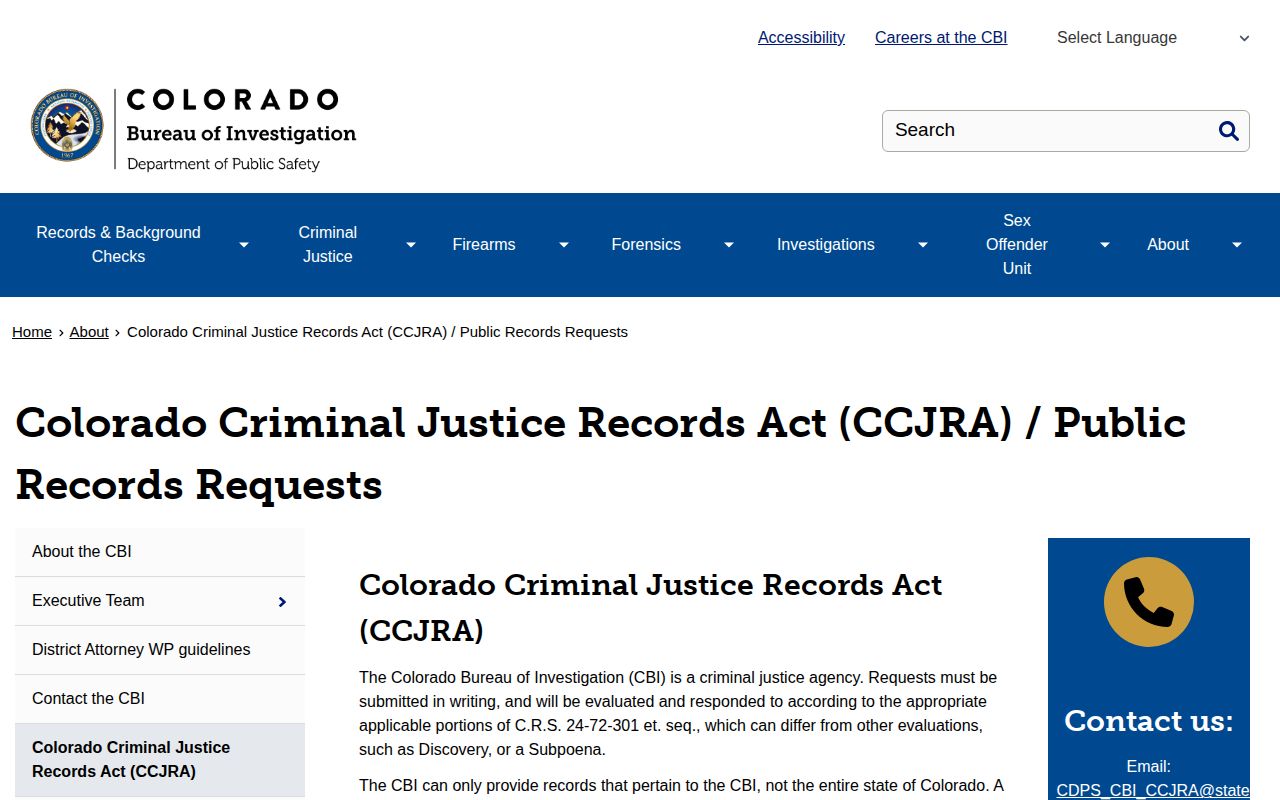
For a San Miguel booking photo, use the Sheriff's form first; statewide CBI materials help explain the Colorado records framework but do not replace the county custodian.
- Open the San Miguel County Criminal Justice Records Request Form.
- Enter requester contact details and upload the required state-issued ID.
- Identify the person, booking date, incident date, case or report number, and date of birth if known.
- Select or describe Photos and specify booking photograph or arrest photograph for the named custody event.
- Include the release date or booking summary reference if it is known.
- Acknowledge the CCJRA statement and any required fee estimate.
- Expect review, possible redaction, withholding, or a fee request before release.
The county lists a $33.38 per hour research fee with the first hour free, no charge for electronic release, $5 for the first 15 physical pages, $0.25 per page after that, and $20 for a flash drive. It does not give a booking-photo retention period. It does list booking video retention as 30 days, so a request involving video should be prompt.
San Miguel Photo Record Limits
The records form gives useful limits even though it does not state a booking-photo retention window. It identifies booking video as retained for 30 days and 911 calls as retained for one year. That makes timing important when the photo request is part of a larger records issue involving video, audio, or other media. Ask for the specific booking photo, and ask separately for any time-sensitive media tied to the same custody event.
CCJRA review also matters. The Sheriff's records unit may redact, withhold, or limit material when Colorado law requires it. Juvenile records, sealed records, active cases, protected personal details, and privacy-balanced records may not be released in the same way as a basic record of official action.
A good request should name the person, include the booking date or incident date, identify the case or report number if known, and state that the requested record is the booking photograph for that custody event. If the person was later transferred to CDOC, ask the Sheriff's Office for the county booking photo and use CDOC separately for any state offender photo. Those are different records.
If the booking photo is tied to a recent release, also ask for the booking and release record when the release date or release reason matters. The photo can identify the custody event, but the release record explains how that event ended. Keeping those requests paired helps avoid relying on an image without the matching legal context.
CDOC and CBI Photo Routes
If a San Miguel County case moved into a Colorado prison sentence, the mugshot question may shift to CDOC. The CDOC Offender Search is the statewide public search for people under CDOC jurisdiction. It accepts DOCNO, last name, first name, and gender. CDOC photos, where shown, are state offender photos. They are not the same as a San Miguel County Jail booking-photo copy.
The Colorado Bureau of Investigation sex offender registry is another separate path. It applies only to people required to register and does not cover every released inmate. CBI materials state that not all registrant categories are posted online and that a complete list for a local area may require contacting local police, a county sheriff, or CBI through the proper form and fee route. Use CBI only for registry-specific questions.
Third-Party Sites and News Sources
Unofficial sites and old news items may carry a booking photo, but they should not be treated as the official San Miguel County record. They may be incomplete, copied from older data, tied to another jurisdiction, or still visible after an official source changes access. Do not pay a private site for official San Miguel County release confirmation. Use the Sheriff's Office, court, CDOC, CBI, BOP, ICE, or VINE depending on the custody path.
News photos are usually incident-specific. They can help identify which case or arrest event to ask about, but they are not a full booking-photo archive. If a news item appears to describe a release from San Miguel County Jail, compare it with the Activity Logs, jail phone check, court record, and official records request. A person released locally and later taken by another agency may have more than one public trail.
Do not use an unofficial photo as proof of current custody or release. Photos can remain online long after the custody status changes. A current custody check comes from the jail or the relevant custody agency. A release date comes from the release record, court record, CDOC, BOP, ICE, or another source with control over that custody event.
Sealing and Mugshot Removal
Colorado Judicial Branch materials explain that sealing hides criminal records from public view, while the records still exist and access is restricted. CBI states that, effective July 1, 2024, it no longer takes a CBI fee for sealing, though other court fees may remain. For a San Miguel County booking photo, sealing may affect official public access, but the exact effect depends on the court order and the source holding the photo.
Colorado's mugshot-site removal context is narrower. Colorado FOIC reporting on the 2014 law explains that certain commercial sites charging removal fees must remove booking photos or identifying information for free when the person was not charged, charges were dropped, or the person was acquitted. This does not erase all official records and does not guarantee removal from every news, archive, or copied source.
Official source first: Ask the Sheriff's records unit, the court, CDOC, or CBI about the record they control. A private copy is not the official release record.
When a record has been sealed, do not assume the original event was erased. Sealing changes public access. The record may still exist for limited official purposes, and older copies outside the official source may need separate correction or removal requests. The court order is the starting point for deciding which agencies should restrict access.
For official sources, send the sealing order or case information to the agency that holds the record. The Sheriff's Office, court, CDOC, and CBI each control different records. A request to one office may not update another office's copy.